Faculty of
Engineering
32+
180+
50+
40+
Faculty Members
Students Placed
Tier 1 Placed
Student Aboard
About the Department
The Department of Electronics and Communication Engineering was established in 1988 and has made significant strides in academic excellence since its inception, supported by highly motivated students and a team of well-qualified faculty members. The B.Tech ECE programme is accredited by the National Board of Accreditation (NBA) and the Accreditation Board for Engineering and Technology (ABET), reflecting the department’s commitment to quality education and global academic standards.
In recognition of its academic excellence and technological impact, the department was honoured as the recipient of the “Centre of Excellence in Electronics and Communication Technologies” at the Times Now Education Summit 2026.
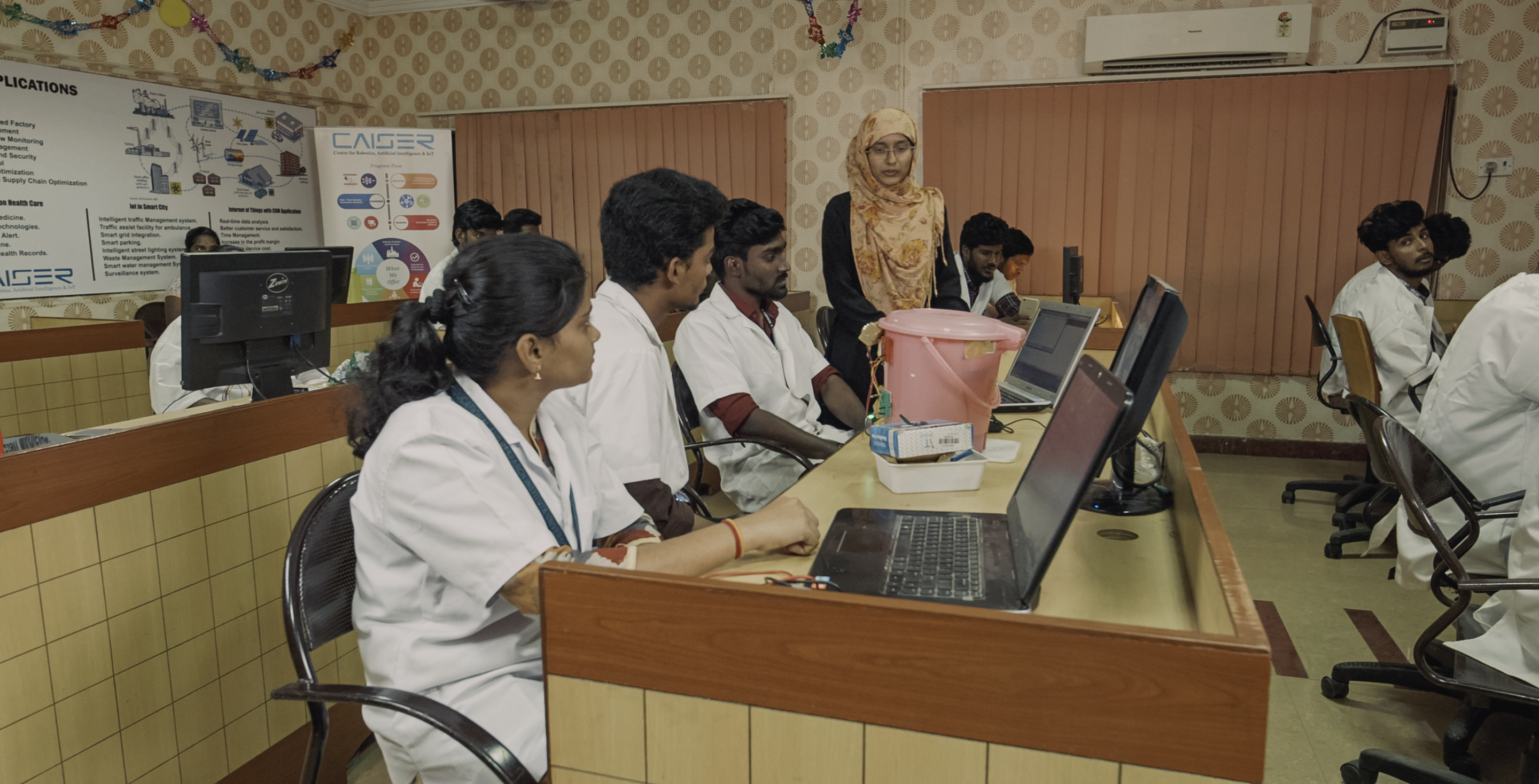
The department is equipped with state-of-the-art technology laboratories, including a Centre of Excellence in Smart Agriculture, which promotes innovation, experiential learning, and applied research. The department has consistently been proactive in organizing national and international conferences, fostering academic exchange and professional development. A DRDO–CABS funded research project on antenna design has been successfully completed, contributing to strategic and application-oriented research outcomes.
Students continuously enhance their knowledge and technical expertise through participation in certification programmes, competitive technical forums, and academic platforms, supported by strong faculty mentoring. The department also maintains active international academic collaborations, enabling students to undertake short-term projects in emerging and interdisciplinary technology domains. Research scholars in the department actively engage in diverse emerging areas of study, contributing to the department’s research strength.
To strengthen industry exposure and skill development, the department has established Memoranda of Understanding (MoUs) with leading organizations such as BSNL, NITTTR, IIT-PALS, and IGL, facilitating skill-based industrial training, internships, and professional engagement. The department demonstrates a strong research profile, with quality publications in reputed international journals and conferences, an appreciable H-index, authored books, and multiple patents filed by faculty members.
Vision
To achieve excellence in academics and research in evolving competent core areas of Electronics and Communication Engineering and to effectively respond to the demands of industry and R & D organizations.
Mission
- M1: To accomplish academic excellence through valuable teaching-learning processes to meet requirements of the industry and society.
- M2: To prepare students to face the challenges in the field of electronics and communication engineering and prepare them as responsible engineers with ethical values.
- M3: To promote the zeal for innovation and creativity among students towards research and development.
- M4: To augment students with skills needed for employability, entrepreneurship and for pursuing higher studies.
Quality Policy
Learn, Teach and Practice validated procedures with transparency.
National Board of Accreditation
Programme Educational Objectives (PEOs)
- PEO 1:Graduates will apply their analytical skills to explore socially acceptable and economically feasible solutions for real-life problems using modern design tools.
- PEO 2: Graduates will work in a diverse environment to address the needs of the organization and society.
- PEO 3:Graduates will Engage life-long learning and research, by pursuing higher studies,and / or actively participating in professional societies.
- PEO 4:Graduates will succeed as entrepreneurs by exhibiting their leadership traits and innovative skills.
Program Outcomes (POs)
- PO-1 Engineering knowledge: Apply the knowledge of mathematics, science, engineering fundamentals, and an engineering specialization to the solution of complex engineering problems.
- PO-2 Problem analysis: Identify, formulate, review research literature, and analyze complex engineering problems reaching substantiated conclusions using first principles of mathematics, natural sciences, and engineering sciences.
- PO-3 Design/development of solutions: Design solutions for complex engineering problems and design system components or processes that meet the specified needs with appropriate consideration for the public health and safety, and the cultural, societal, and environmental considerations.
- PO-4 Conduct investigations of complex problems: Use research-based knowledge and research methods including design of experiments, analysis and interpretation of data, and synthesis of the information to provide valid conclusions.
- PO-5 Modern tool usage: Create, select, and apply appropriate techniques, resources, and modern engineering and IT tools including prediction and modeling to complex engineering activities with an understanding of the limitations.
- PO-6 The engineer and society: Apply reasoning informed by the contextual knowledge to assess societal, health, safety, legal and cultural issues and the consequent responsibilities relevant to the professional engineering practice.
- PO-7 Environment and sustainability: Understand the impact of the professional engineering solutions in societal and environmental contexts, and demonstrate the knowledge of, and need for sustainable development.
- PO-8 Ethics: Apply ethical principles and commit to professional ethics and responsibilities and norms of the engineering practice.
- PO-9 Individual and team work: Function effectively as an individual, and as a member or leader in diverse teams, and in multidisciplinary settings.
- PO-10 Communication: Communicate effectively on complex engineering activities with the engineering community and with society at large, such as, being able to comprehend and write effective reports and design documentation, make effective presentations, and give and receive clear instructions.
- PO-11 Project management and finance: Demonstrate knowledge and understanding of the engineering and management principles and apply these to ones own work, as a member and leader in a team, to manage projects and in multidisciplinary environments.
- PO-12 Life-long learning: Recognize the need for, and have the preparation and ability to engage in independent and life-long learning in the broadest context of technological change.
Program Specific Outcomes (PSOs)
- PSO1: Recognize, adapt the knowledge of science, engineering and mathematics for providing solutions to techno-economical problems in real world.
- PSO2: Formulate logical approach to solve engineering problems in core area of Electronics and Communication Engineering.
- PSO3: Demonstrate inter-disciplinary subject knowledge in diverse fields of Engineering and Technology.
- PSO4: Apply the emerging technology and open source tool for life-long learning to face the challenges in society.
Accreditation Board for Engineering and Technology
Programme Educational Objectives (PEOs)
- PEO 1:Graduates will apply their analytical skills to explore socially acceptable and economically feasible solutions for real-life problems using modern design tools.
- PEO 2: Graduates will work in a diverse environment to address the needs of the organization and society.
- PEO 3:Graduates will Engage life-long learning and research, by pursuing higher studies,and / or actively participating in professional societies.
- PEO 4:Graduates will succeed as entrepreneurs by exhibiting their leadership traits and innovative skills.
Student Outcomes - EAC
- SO1: An ability to identify, formulate, and solve complex engineering problems by applying principles of engineering, science, and mathematics.
- SO2: An ability to apply engineering design to produce solutions that meet specified needs with consideration of public health, safety, and welfare, as well as global, cultural, social, environmental, and economic factors.
- SO3: An ability to communicate effectively with a range of audiences.
- SO4: An ability to recognize ethical and professional responsibilities in engineering situations and make informed judgments, which must consider the impact of engineering solutions in global, economic, environmental, and societal contexts.
- SO5: An ability to function effectively on a team whose members together provide leadership, create a collaborative and inclusive environment, establish goals, plan tasks, and meet objectives.
- SO6: An ability to develop and conduct appropriate experimentation, analyze and interpret data, and use engineering judgment to draw conclusions.
- SO7: An ability to acquire and apply new knowledge as needed, using appropriate learning strategies.
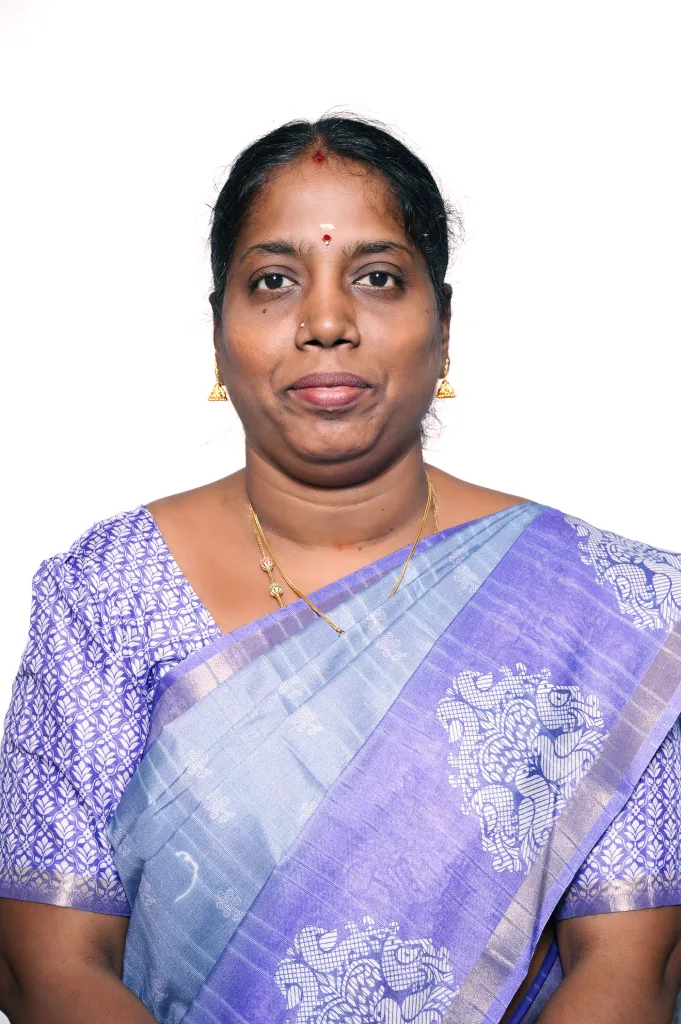
Dr. U. Jayalatsumi
M.E, Ph.D
HoD's Desk
A Message
Warm Greetings!!!
The Department of Electronics and Communication Engineering, since its inception in 1988, has been one of the most sought-after departments of the institution and is accredited by the National Board of Accreditation (NBA) and the Accreditation Board for Engineering and Technology (ABET), reflecting its commitment to quality education and global academic standards. The primary objective of the department is to impart strong fundamental concepts in Electronics and Communication Engineering, enabling students to adapt effectively to rapid advancements in emerging technologies. Over the years, the department has played a pivotal role in transforming students into competent and successful engineers by equipping them with essential technical and professional skill sets.
In alignment with technological advancements and industry requirements, the postgraduate programme in VLSI Design and Embedded Systems was introduced. The department also hosts active research scholars working in various contemporary and potential research domains, contributing to innovation and knowledge advancement.
The department is supported by well-qualified and dedicated faculty members who have made significant contributions through funded research projects, patent publications, and research papers in reputed national and international journals and conferences. Notably, the department has received support from DRDO–CABS for carrying out sponsored research on the design of antenna arrays with compatible radomes for marine pollution detection, reflecting its research capability and societal relevance.
The department is equipped with state-of-the-art laboratories that provide essential practical exposure, enhancing student employability, entrepreneurial skills, and preparedness for higher studies. At a time when the nation is advancing rapidly under initiatives such as Digital India, the field of Electronics and Communication Engineering offers vast opportunities, and it is encouraging to witness the department’s continuous progress in meeting these evolving demands.
The curriculum is periodically updated to address industry expectations and societal needs. To strengthen academic and research collaboration, the department has established Memoranda of Understanding (MoUs) with reputed organizations, thereby enhancing the quality of professional education. Faculty members and students actively participate in recognized professional bodies such as IEEE, IETE, IE(I), and ISTE, fostering professional growth and global exposure.
The department has also formed a student association, ECOMET, through which various technical events, workshops, and knowledge-sharing activities are organized to keep students updated with the latest technological trends. With the integration of emerging technologies and a strong academic foundation, I am confident that the Department of Electronics and Communication Engineering will continue to nurture the full potential of its students, enabling them to achieve excellence in their professional careers while contributing meaningfully to society.
Research & Development
Our research is driven by the big picture. The students and faculty from the department of Electronics & communication Engineering are involved in strong research work along with academics. Research work is carried out in all latest areas such as.
Thrust Areas Of Research
- VLSI and Embedded Systems
- Wireless Networks
- Digital Image Processing
- Quantum Communication
- Internet of Things
- Microwave Antenna Design
- Artificial Intelligence
Placed
Compaines Visited
Studies
Salary Package
Our Recruiters