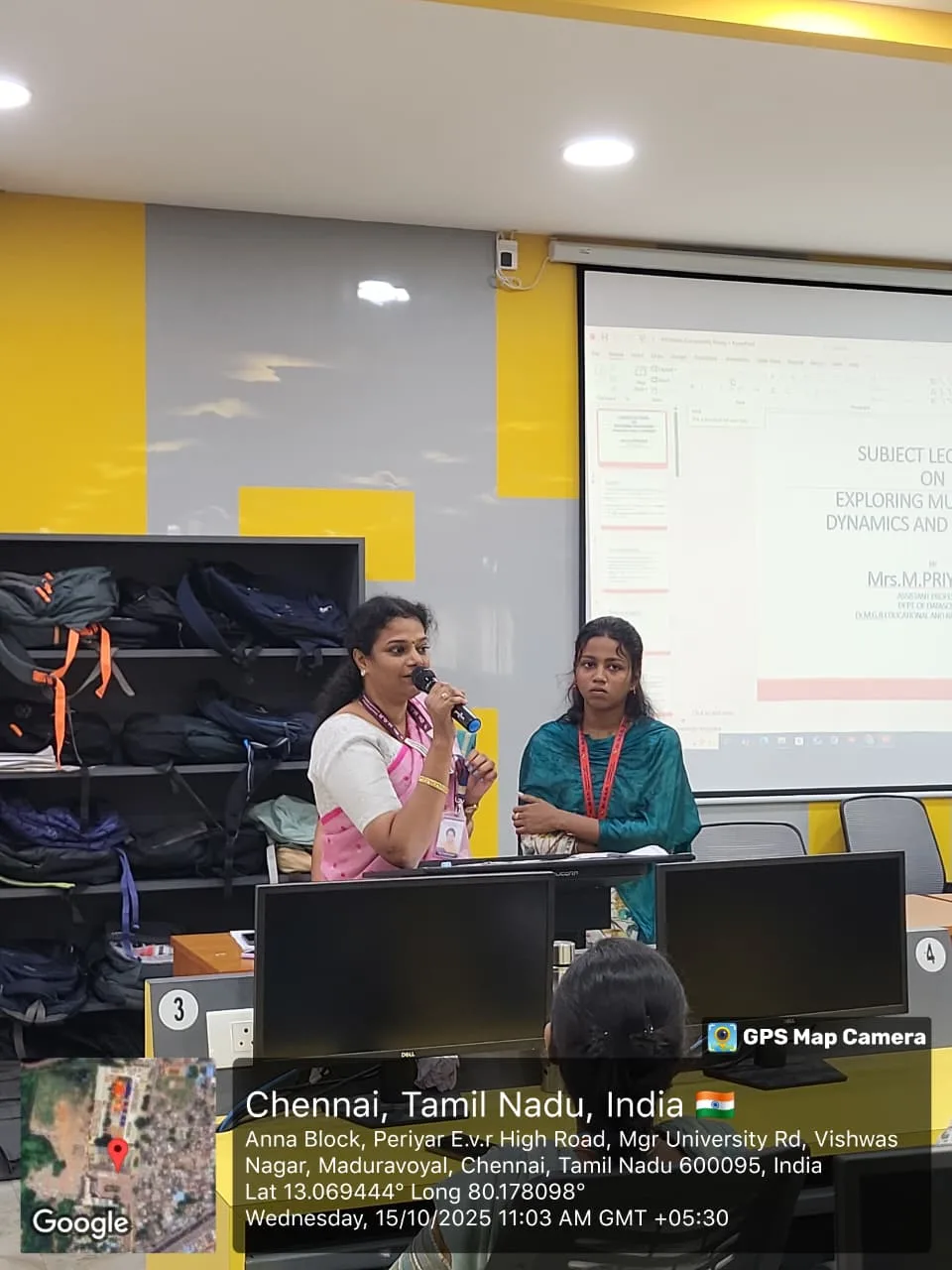
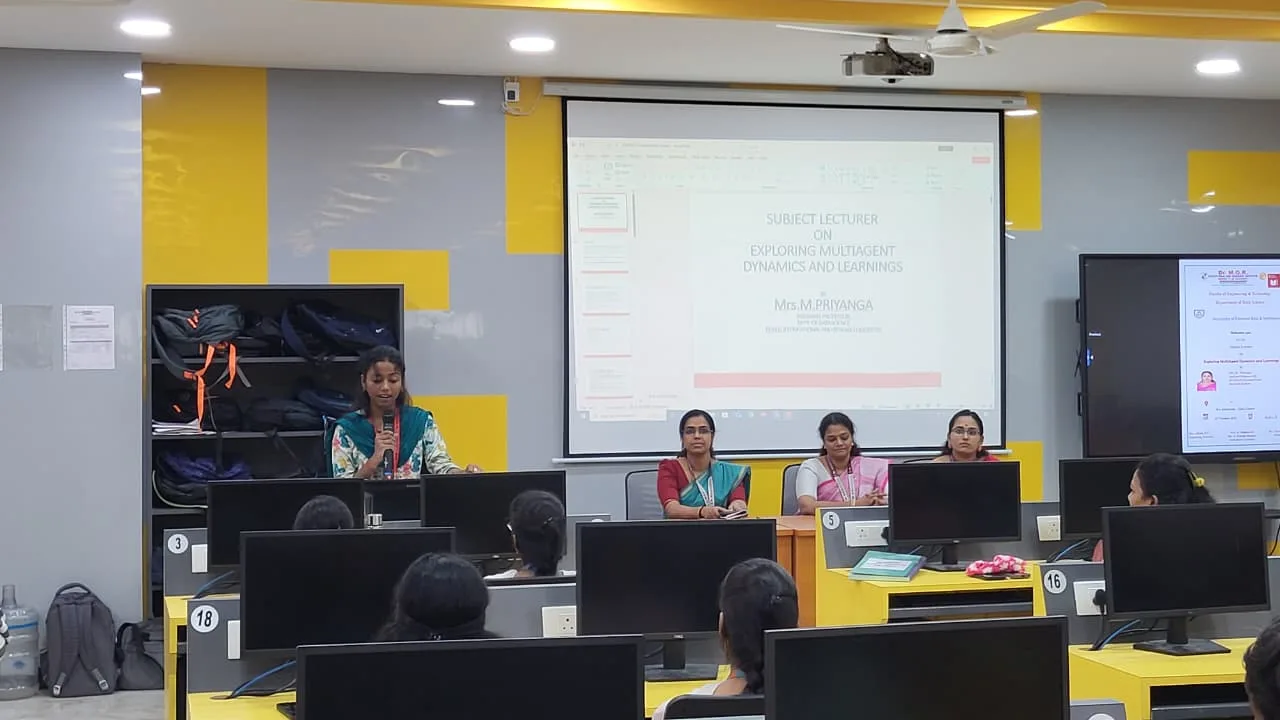
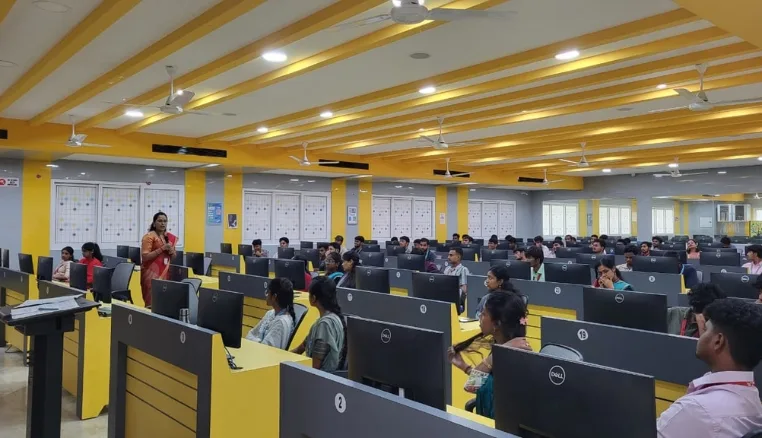
Subject Lecture on Exploring Multi-Agent Dynamics and Learnings in Data Science
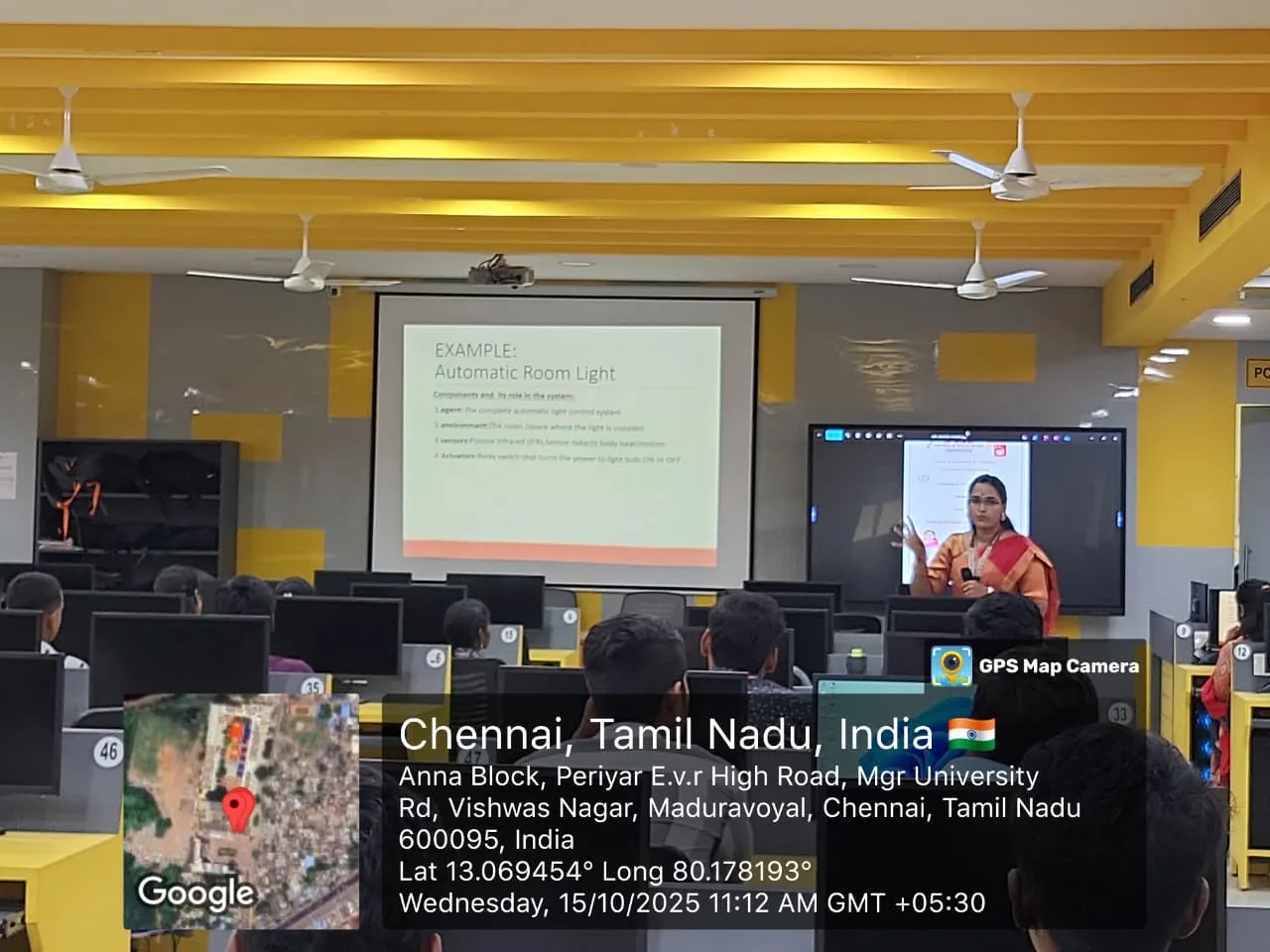
The Data Science Department organized a subject lecture titled “Exploring Multi-Agent Dynamics and Learnings” to strengthen students’ conceptual foundation in intelligent agents and their role in modern data-driven systems. The resource person, Mrs. M. Priyanga, introduced the notion of AI agents, their key characteristics such as autonomy, goal-orientation, adaptiveness, and the distinction between single-agent and multi-agent environments. Different categories of agents, including simple reflex, model-based, goal-based, utility-based and learning agents, were explained using real-time examples like self-driving cars, online recommendation systems and automatic room lighting. The session highlighted how multi-agent systems support scalable decision-making in complex environments, which is central to current research trends in AI and data science. Through interactive discussion and scenario-based questioning, students related theoretical models of agents and environments to practical data science applications, thereby enhancing their understanding of intelligent decision systems and laying groundwork for advanced courses in AI, machine learning and analytics
KEY HIGHLIGHTS
Overview of AI agents and their characteristics, including autonomy, reactivity, proactivity and goal-orientation, with everyday data-driven examples.
Detailed explanation of simple reflex, model-based, goal-based, utility-based and learning agents using case studies such as self-driving cars, thermostats and recommendation engines.
Discussion on nature of environments for agents, covering discrete vs continuous, observable vs partially observable, static vs dynamic and deterministic vs non-deterministic settings.
Illustration of multi-agent environments and their importance in solving large-scale AI and data science problems through collaborative and interactive learning.
Interactive question-and-answer segment with multiple-choice questions to reinforce key concepts and assess students' conceptual understanding
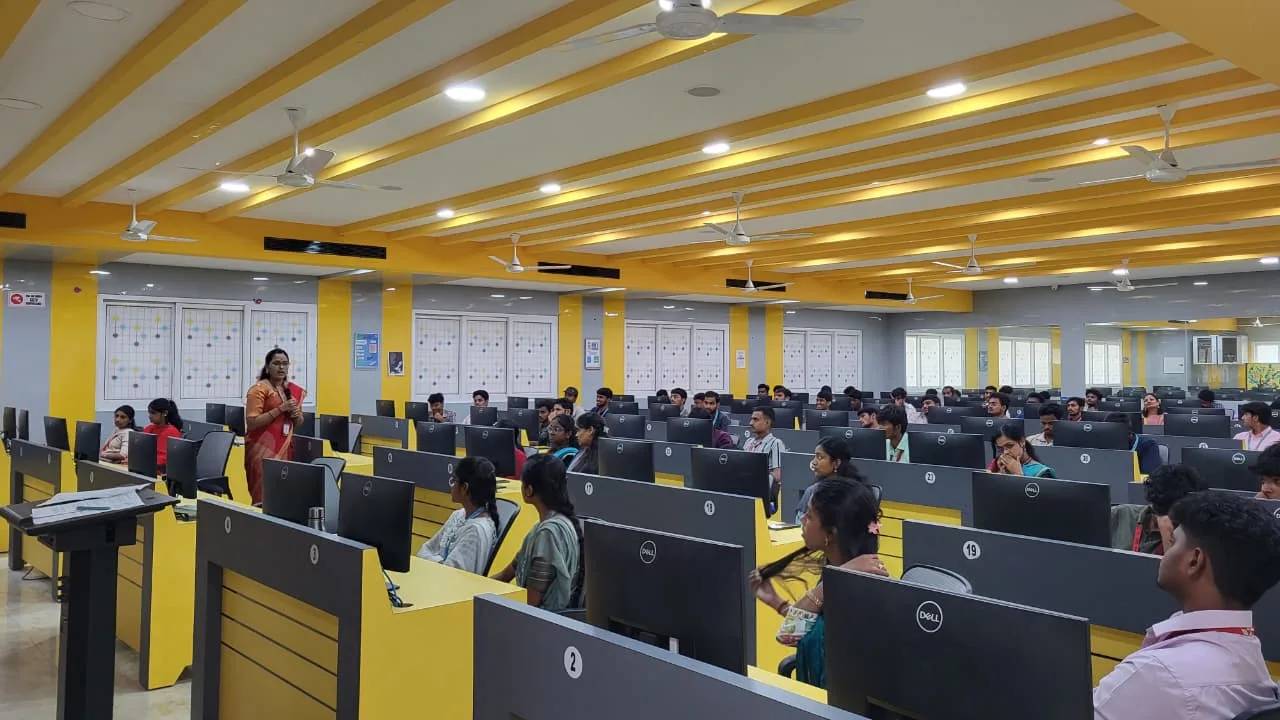
Active participation of second-year Data Science students, encouraging analytical thinking and preparing them for advanced AI and machine learning coursework.