Students Name: John Arthur A, J. Sathish Kumar, Srivardhini. R.S
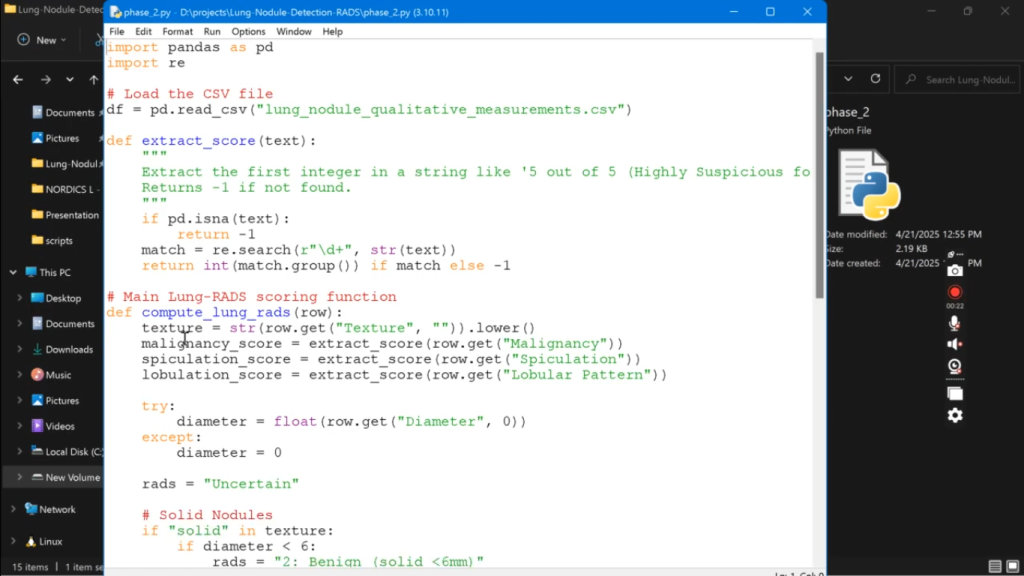
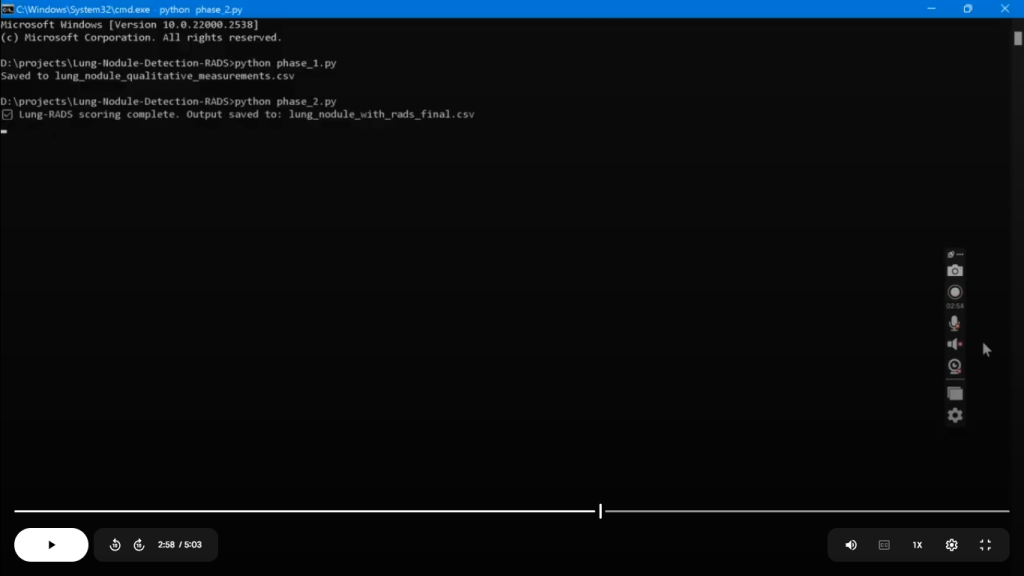
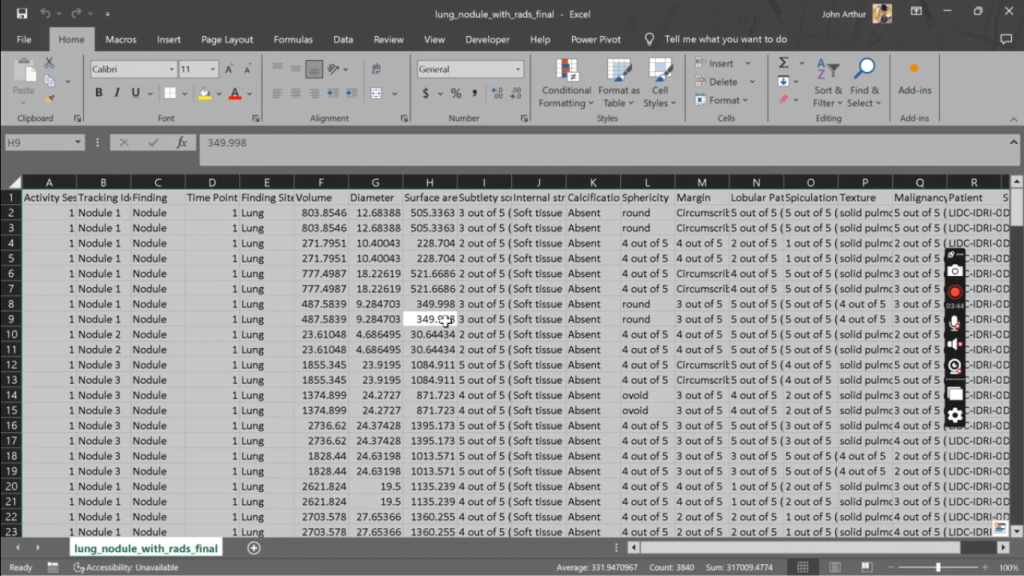
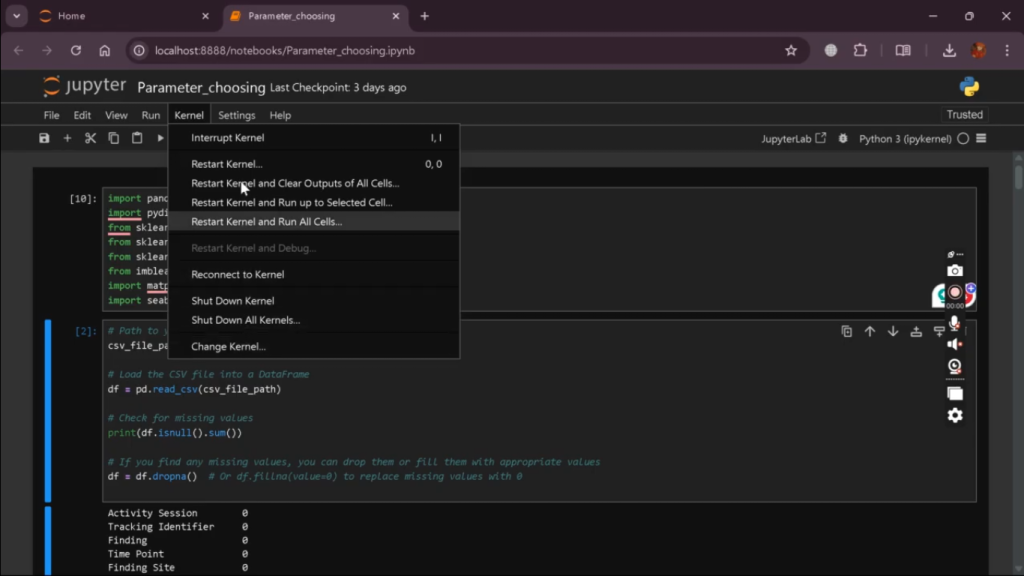
Lung cancer continues to be a leading cause of cancer-related mortality worldwide, predominantly due to its detection at later stages when therapeutic options are limited. Early and accurate identification of malignant pulmonary nodules can significantly improve patient outcomes. In this study, we present a computer-aided diagnostic (CAD) framework that utilizes computed tomography (CT) scan data in conjunction with structured radiological annotations to automatically detect and classify lung nodules. The proposed system is designed to assess malignancy and categorize nodules according to Lung-RADS guidelines. Our dataset comprises annotated CT scans from the LIDC-IDRI database, with radiomic and morphologic features such as volume, surface area, spiculation, and margin being extracted. These features were used to train a binary classifier for high versus low malignancy risk, achieving an Area under the Curve (AUC) score of 0.85. We also developed a suite of visual diagnostic tools, including ROC curves, confusion matrices, and boxplots, to provide interpretable insights into model performance. This study underscores the potential of CAD systems in supporting early lung cancer detection and aiding radiologists in decision-making.